inclusive-team
E-Experience
In their civic lives, Saudi citizens and residents enjoy one of the most advanced digital ecosystems in the world. Through Absher, they can renew a license in seconds. Through Sehhaty, they access medical records instantly. Through Nafath, their digital identity is secure and portable. The government has set a standard of Radical Transparency and Instant Execution.
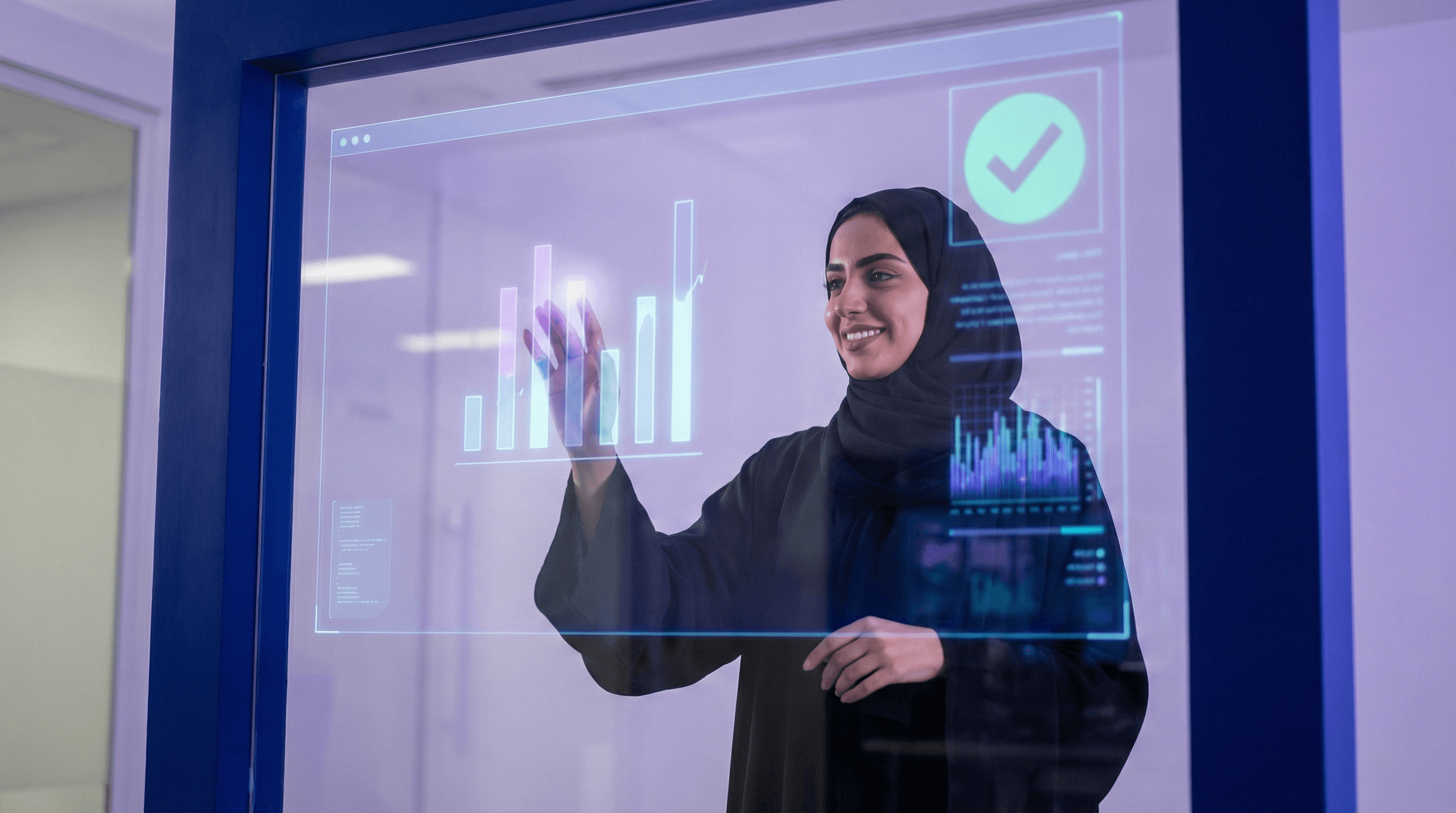
In the Kingdom of Saudi Arabia, a profound digital paradox exists.
In their civic lives, Saudi citizens and residents enjoy one of the most advanced digital ecosystems in the world. Through Absher, they can renew a license in seconds. Through Sehhaty, they access medical records instantly. Through Nafath, their digital identity is secure and portable. The government has set a standard of Radical Transparency and Instant Execution.
Yet, when these same individuals walk into their workplace, they often step back in time. They face a "Black Box" of HR operations. To request a salary certificate, they must chase a signature. To understand a deduction on their payslip, they must send emails that go unanswered. To review their employment contract, they have to ask a manager to unlock a filing cabinet.
This gap between the Civic Experience and the Employee Experience is a primary driver of distrust.
In the era of Vision 2030, technology is no longer just a tool for efficiency; it is the foundation of Employee Relations (ER). Trust is not built on promises; it is built on visibility. When an organization uses technology to open the "Black Box," it signals respect, fairness, and accountability.
Here is how HR leaders can leverage technology to transform Employee Relations from a source of friction into a competitive advantage.
1. The Government as the Trust Standard
The Saudi government has effectively forced transparency onto the private sector through platforms like Qiwa and Mudad.
• The Contract: Historically, employment contracts were often hidden or altered. Now, Qiwa ensures that the contract is digital, authenticated, and accessible to the employee at any time.
• The Paycheck: Mudad (linked to the Wage Protection System) provides indisputable proof of payment.
Smart organizations do not fight this; they mirror it. If the government provides 100% visibility into a citizen’s data, the employer must provide 100% visibility into the employee’s career data.
• The Strategic Move: Integrate your internal HRMS with these government platforms. When an employee sees that their internal dashboard matches their GOSI records perfectly, trust is established mathematically.
2. Democratizing Data: The End of "Gatekeeper HR"
In legacy organizations, HR is the gatekeeper of information. "Come to my office" is the standard response to a query. This creates a power imbalance that breeds suspicion.
Modern Employee Relations relies on Self-Service Technology.
• Empowerment: Employees should have mobile access to their data: payslips, leave balances, benefits usage, and policy documents.
• The Psychological Impact: When an employee can generate their own "Introduction Letter" for a bank loan via an app without asking for permission, they feel autonomous. This reduces the "parent-child" dynamic between HR and staff, replacing it with a professional partnership.
3. Communication Intelligence: Bridging the Cultural Gap
Employee Relations often breaks down due to communication mismatches, particularly in the diverse, multi-national teams driving Giga-projects.
As highlighted in recent leadership insights, the "Art of Receiving Feedback" is critical in a high-context culture like Saudi Arabia. Technology can act as a bridge here.
• The Nudge: Modern HR platforms can send "Nudges" to managers. Example: "It has been 3 months since your last 1:1 with Ahmed. Schedule a check-in."
• The Safe Space: "Ticketing Systems" allow employees to raise grievances or ask questions without the anxiety of a face-to-face confrontation. For employees from cultures that value hierarchy and indirect communication, a digital channel provides the psychological safety needed to voice concerns before they become resignations.
4. The "Two-Tier" Tech Trap
A major risk to trust is the Digital Divide between permanent and outsourced staff. It is common for permanent staff to have a sleek app, while outsourced staff (who may sit at the next desk) rely on manual paper forms and WhatsApp messages.
• The Signal: This signals that the outsourced staff are second-class citizens. It breeds resentment and "Badge Bias."
• The Solution: Adopt the "One Standard" approach championed by Inclusive Solutions. Ensure that outsourced workforce management includes access to digital dashboards, payslips, and request tracking. When a contractor has the same digital dignity as a director, you unify the culture.
5. Compliance as a Trust Shield
Many employees fear that HR policies are applied arbitrarily. "Why was I deducted for being late, but he wasn't?"
Technology is the impartial arbiter.
• Automated Policy: When attendance policies are coded into the system, the bias is removed. However, leaders must ensure the policy itself is not toxic. As noted in recent critiques, policies that punish an employee with "2 hours of work for being 1 minute late" are a "legal and cultural disaster".
• The Audit Trail: Digital requests create a permanent record. An employee cannot be told "We lost your leave request." This digital trail protects the employee from bad management and protects the company from labor disputes.
6. Avoiding "Digital Clutter"
While tech is powerful, too much of it creates "Digital Clutter," which destroys focus and trust. Employees are often bombarded with notifications from Teams, WhatsApp, Email, and three different HR apps.
• The Risk: As highlighted in productivity analysis, digital clutter causes employees to miss critical updates, leading to anxiety.
• The Fix: Unified platforms. Do not ask employees to use one app for payroll, another for insurance, and a third for performance. Consolidate into a single "Super-App" experience. If you are using an outsourcing partner, ensure their tech stack integrates seamlessly so the employee has "One Point of Contact".
7. When Not to Use Tech: The Human limit
Trust is fragile. While tech builds transparency, it cannot build empathy. There is a temptation to use AI for everything, including conflict resolution. This is a mistake.
• The Principle: "Human Experience Trumps AI in Crisis". If an employee is facing a disciplinary hearing, a medical emergency, or a termination, they must speak to a human.
• The Balance: Use tech for the transaction (the paperwork); use humans for the interaction (the emotion). If an employee receives a robotic notification about a rejected sick leave request during a health crisis (like chemotherapy), trust is destroyed permanently.
Website:https://www.inclusive.sa | Email: info@inclusivesolutions.com.sa
Join the newsletter
Be the first to read our articles.
Follow Social Media
Follow us and don’t miss any chance!