inclusive-team
E-Experience
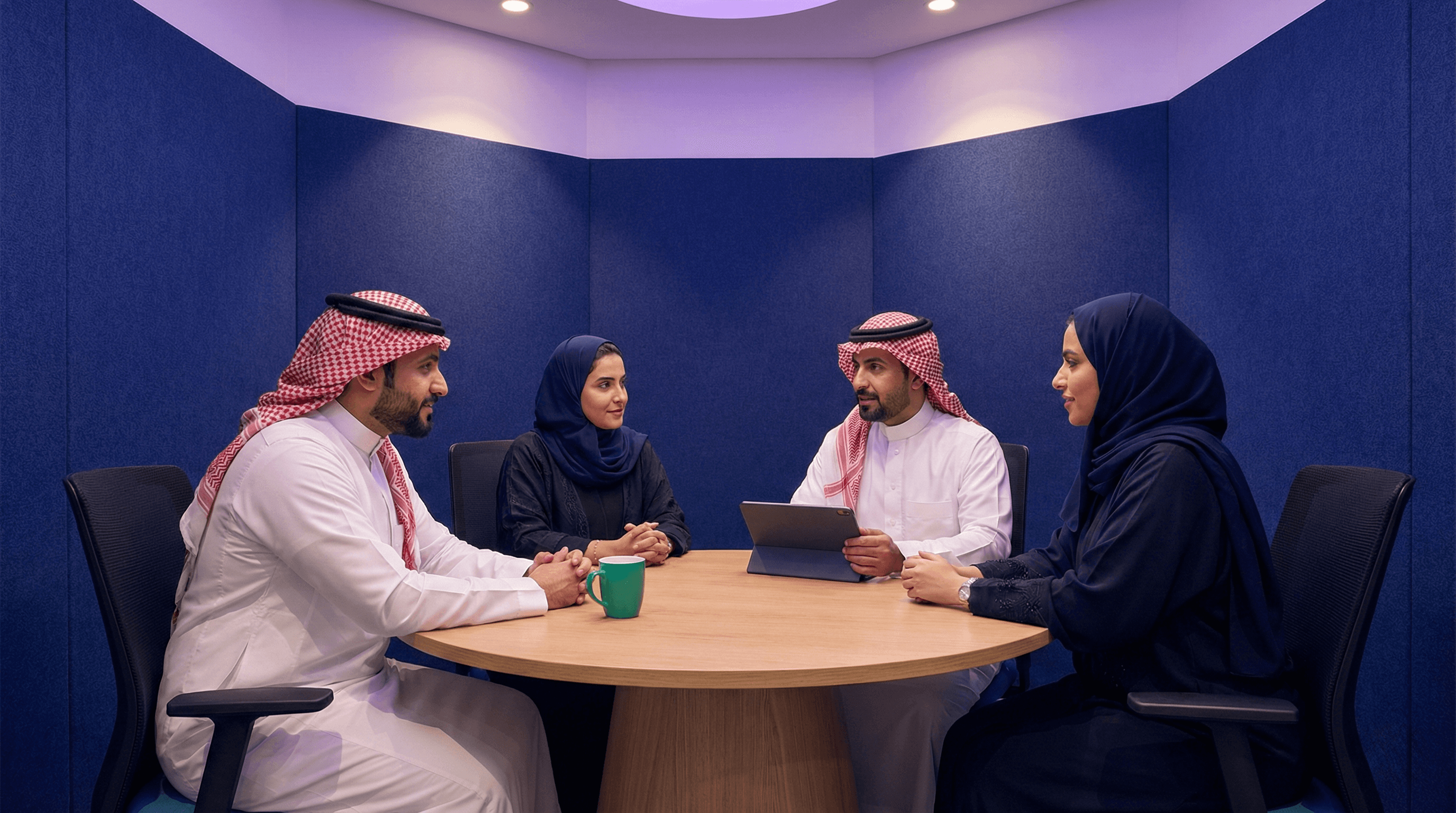
In the rapid scaling of Saudi Arabia's Giga-projects and corporate transformations, a new workforce model has emerged. Walk into any major project office in Riyadh, NEOM, or Jeddah, and you will find a hybrid ecosystem: permanent employees working side-by-side with consultants, secondees, and outsourced staff.
In the rapid scaling of Saudi Arabia's Giga-projects and corporate transformations, a new workforce model has emerged. Walk into any major project office in Riyadh, NEOM, or Jeddah, and you will find a hybrid ecosystem: permanent employees working side-by-side with consultants, secondees, and outsourced staff.
Statistically, this "borrowed" workforce is growing. Organizations use Employee Outsourcing to remain agile, manage Nitaqat ratios, and access specialized skills quickly.
However, a cultural fracture is widening. In many organizations, a stark "Two-Tier" system exists. Permanent employees enjoy robust onboarding, state-of-the-art HR apps, and wellness programs. Meanwhile, outsourced colleagues—who often sit at the same desks doing critical work—are treated as "vendors." They navigate bureaucratic paper-based processes, receive zero onboarding, and are excluded from company culture.
This segregation is a strategic error. You cannot build a "One Team" Vision 2030 goal with a fragmented workforce.
To unlock high performance, HR leaders must dismantle this caste system and implement The "One Standard" Experience. This approach ensures that every individual contributing to your mission—regardless of whose payroll they are on—receives the same level of professionalism, dignity, and operational support.
1. The Cost of the "Badge Bias"
The visible symbols of the two-tier system—different badges, exclusion from town halls, blocked access to the coffee bar—create "Badge Bias." This tells the outsourced employee: "You are a commodity."
The result is predictable:
• Transactional Effort: If you treat people like vendors, they bill like vendors. You lose discretionary effort and innovation.
• Brand Risk: In the age of social media, a disgruntled contractor affects your employer brand just as much as a permanent employee.
• Operational Friction: When outsourced staff are locked out of communication loops or HR systems, projects slow down.
As we scale, we must realize that Human Experience (HX) trumps contractual status. In moments of crisis or transformation, your outsourced staff need the same psychological safety and leadership clarity as your core team.
2. Defining the "One Standard" Model
Adopting a "One Standard" model does not mean ignoring legal distinctions or compensation structures. It means standardizing the Employee Experience (EX).
Leading providers like Inclusive Solutions are pioneering this model in the Kingdom. The philosophy is simple: One standardized employee experience, one governance model, and one point of contact.
• The Shift: Whether a talent is hired directly or through an outsourcing partner, the process of their employment—from the warmth of the welcome to the efficiency of the payroll—must be indistinguishable in quality.
3. Onboarding: The Universal First Impression
The "Valley of Death" in recruitment is the period between signing the contract and Day 1. For outsourced staff, this is often a black hole of silence, followed by a chaotic first day where security guards deny them entry because their names aren't on the list.
A "One Standard" approach demands that outsourced staff receive a structured Onboarding journey.
• Pre-Boarding: Visa processing (E-Wekala), medical checks, and Iqama issuance must be managed with "White-Glove" precision, not administrative apathy.
• Day 1 Integration: They should receive a "Welcome Kit," a buddy, and a clear orientation, just like a permanent hire. As noted in recruitment insights, overlooking onboarding is a primary driver of early attrition.
4. The Technology Gap: Digital Inclusion
In many Saudi companies, permanent staff manage their lives via a sleek mobile app, while outsourced staff fill out paper forms for leave requests. This digital apartheid kills productivity.
To unify culture, you must unify the Digital Employee Experience.
• The Inclusive Approach: Outsourced employees should have access to HR Technology that allows them to view payslips, request letters, and manage their data via self-service dashboards.
• Transparency: Utilizing platforms linked to Mudad and Qiwa ensures that outsourced staff have the same trust in their payroll accuracy and compliance as internal staff.
5. Feedback and Psychological Safety
Are your outsourced staff included in your engagement surveys? If not, you are blind to 30-50% of your workforce's sentiment.
Recent management insights emphasize the importance of the "Art of Receiving Feedback"—creating a culture where feedback is a tool for growth, not judgment. This must extend to the contract workforce.
• Stay Interviews: Conduct structured check-ins with key outsourced talent. Ask them: "What barriers are preventing you from delivering?"
• Feedback Loops: Ensure your outsourcing partner has a defined escalation path and "Ticketing System" so grievances are heard and resolved, rather than festering in silence.
6. The "Compliance Shield" vs. The "Compliance Weapon"
For some HR leaders, "Compliance" is an excuse to exclude outsourced staff. "We can't invite them to the party because of co-employment risk."
This is a misunderstanding of Saudi Labor Law. You can integrate culture without blurring the legal lines of employment.
• The Partner's Role: A robust partner like Inclusive Solutions acts as the legal employer, managing the Government Relations (GRO), GOSI, and Medical Insurance liabilities.
• The Client's Role: This frees you to focus on the work and the culture, knowing that the compliance risks (Nitaqat, WPS) are managed by a dedicated team of experts.
7. Wellness and Total Rewards
The "One Standard" extends to well-being. If your permanent staff gets "Class A" insurance and your outsourced staff gets the bare minimum "Class C," you create a health disparity that affects productivity.
• Inclusive Benefits: Strategic outsourcing allows you to offer tier-one benefits (like Bupa Arabia coverage) to your contracted workforce, aligning their care with your internal policies.
• Holistic Health: Include contracted staff in wellness initiatives. As noted in industry critiques, "Wellness" isn't just a fruit basket; it's about not punishing people for being sick or needing time off. A unified culture respects the health of every worker.
8. Managing the Exit: Offboarding with Dignity
How an employee leaves is just as important as how they arrive. Often, outsourced contracts end abruptly, and the employee is escorted out like a security risk.
A "One Standard" culture manages Offboarding with dignity.
• The Process: Whether it's a final exit or a transfer, the process should be seamless, with clear communication regarding End of Service Benefits and visa cancellation.
• The Reputation: A contractor who leaves feeling respected becomes an alumni ambassador. One who leaves feeling used becomes a detractor.
Website:https://www.inclusive.sa | Email: info@inclusivesolutions.com.sa
Join the newsletter
Be the first to read our articles.
Follow Social Media
Follow us and don’t miss any chance!