inclusive-team
Workforce
When a complex project required execution—whether building a refinery or designing a smart city—the default instinct was to import "Ready-Now" expertise. Organizations paid a premium for expatriate talent that could hit the ground running, while local talent was often relegated to administrative or support roles.
For the past five decades, the Saudi labor market has operated on a specific model: "Buy" rather than "Build."
When a complex project required execution—whether building a refinery or designing a smart city—the default instinct was to import "Ready-Now" expertise. Organizations paid a premium for expatriate talent that could hit the ground running, while local talent was often relegated to administrative or support roles.
In the short term, this model delivered projects. In the long term, it created a Capability Void.
As we accelerate toward 2030, this model is legally, financially, and strategically unsustainable. The cost of global talent is skyrocketing, residency regulations are tightening, and the "Nitaqat" system is demanding not just local bodies, but local minds.
The mandate of the Human Capability Development Program (HCDP) is clear: We must transition from an economy that consumes imported skills to one that generates indigenous capability.
For HR leaders, this requires a radical pivot. We must stop viewing "Training" as a soft perk or a compliance tax. We must view Local Upskilling as the primary engine of business continuity. The organizations that win in the next decade will not be those with the biggest recruitment budgets; they will be the ones with the best Internal Academies.
The "Buy vs. Build" ROI Calculation
The financial argument for upskilling is now undeniable. Hiring a senior expatriate involves recruitment fees, relocation costs (as discussed in previous analyses of the "Relocation EX"), premium housing allowances, and school fees.
The Cost of "Buying": High acquisition cost, high flight risk (they leave for the next highest bidder), and zero residual knowledge when they exit.
The ROI of "Building": Investing in a high-potential Saudi national involves L&D costs, but the asset appreciates. The knowledge stays in the Kingdom. The loyalty—if cultivated correctly—is higher.
The Strategy: HR leaders must present this to the C-Suite not as "Education" but as "Asset Management." You are building a sustainable pipeline that insulates the company from global wage inflation.
Escaping the "Degree Inflation" Trap
A major barrier to local capability building is the obsession with credentials. Job descriptions in the Kingdom often demand a Master’s degree and 10 years of experience for mid-level roles. This disqualifies a vast swathe of hungry, capable Saudi youth.
The Shift: We must move to Skills-Based Hiring.
The Logic: As noted in recent HR insights, degrees are static; skills are dynamic. A candidate with a degree from 2015 may have obsolete knowledge, whereas a candidate with recent certifications in AI or Project Management is "Market-Ready."
The Action: Audit your job descriptions. Remove "Degree" barriers where possible. Focus on a Skills Ontology—mapping the specific competencies needed (e.g., Python, Stakeholder Management, Agile) and testing for those. This widens your pool and allows you to hire for potential rather than pedigree.
Vertical Saudization: The Ladder to Leadership
Nitaqat compliance is often achieved through "Horizontal Saudization"—hiring locals for reception, HR admin, and government relations. This is fragile.
Sustainable Workforce strategy focuses on Vertical Saudization—moving nationals up the technical and leadership ladder.
The Gap: There is often a "Broken Rung" between entry-level and middle management.
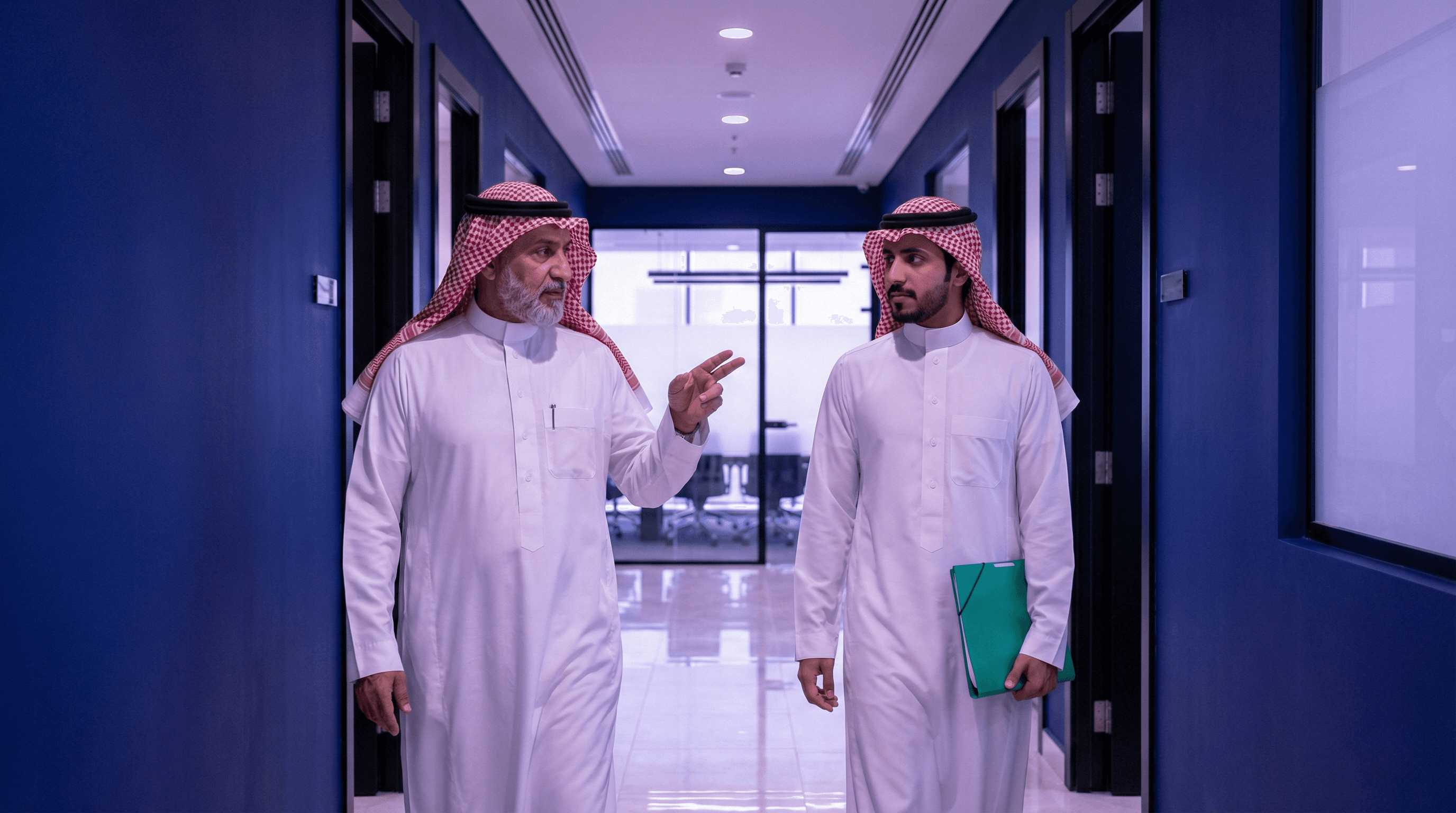
The Fix: Create structured Succession Planning pathways. Identify "High Potential" (HiPo) Saudis in junior roles and pair them with expatriate subject matter experts (SMEs).
The Contract: Make knowledge transfer a KPI. The expatriate’s bonus should be tied to the successful promotion of their Saudi mentee. This turns the expatriate from a "Blocker" into a "Builder."
Adaptability: The Meta-Skill of 2030
What should we be upskilling for? Technical skills (coding, engineering) are half-lives; they decay quickly. The most valuable skill in the Vision 2030 environment is Adaptability.
The Context: The Saudi market changes monthly. Regulations shift, projects pivot, and technologies evolve.
The Need: As highlighted in recruitment trends, recruiters and leaders increasingly value adaptability over deep, narrow expertise.
The Curriculum: Your upskilling programs must focus on Cognitive Flexibility, Problem Solving, and Resilience. We need a workforce that does not panic when the plan changes but asks, "How do we pivot?"
The "Unretirement" Opportunity
Upskilling is not just for youth. A sustainable workforce strategy also re-evaluates the experienced demographic.
The Trend: Global HR trends point to "Unretirement"—bringing experienced professionals back or retaining older workers.
The Application: In KSA, early retirement has drained institutional memory.
The Strategy: Reskill your mid-career Saudi staff. They have the institutional knowledge and the cultural context. With a "Digital Upskilling" sprint, they can become powerful mentors to the Gen Z intake, bridging the gap between tradition and transformation.
L&D as a Retention Tool
In a market where salary wars are rampant, Learning & Development (L&D) is a sticky retention tool. Saudi professionals are ambitious. They are aware of the transformation happening around them and want to be capable of leading it.
The Deal: If you offer an employee a clear Individual Development Plan (IDP) that maps their journey from "Junior Engineer" to "Project Director" over 5 years, they are less likely to leave for a SAR 2,000 raise elsewhere.
The Evidence: Employees stay where they grow. If your organization is a "Dead End" for skills, you will only retain the unmotivated.
Operationalizing the "Academy" Model
How do you execute this without becoming a university? You leverage partners.
The Model: You do not need to build the content yourself. Partner with specialized training providers or use Outsourcing Partners to inject capability.
Inclusive Solutions' Role: We help clients design Competency Frameworks that identify skill gaps. We then help structure the workforce plan to fill those gaps—either through strategic hiring or internal development.
Avoiding "Training Tourism"
A critical failure mode in KSA is "Training Tourism"—sending employees to expensive courses in London or Dubai as a reward, with no expectation of application.
The Fix: The 70-20-10 Model.
70% of learning must be on the job (projects, rotations).
20% from feedback and mentorship.
10% from formal coursework.
The Governance: L&D spend must be tracked against Performance Improvement. If an employee attends a Project Management course, they must lead a project within 3 months. If there is no application, there is no ROI.
Conclusion: From Consumers to Creators
The ultimate goal of a Sustainable Workforce strategy is to turn your organization from a consumer of talent into a creator of talent.
In 2030, the most valuable companies in Saudi Arabia will be those that acted as "Talent Incubators" today. They will be the ones who took a raw graduate, gave them the tools and the trust, and built a Director.
Inclusive Solutions is your architect for capability.
HR Management & Consulting: We design Workforce Plans and Job Architectures that clarify career paths and skill requirements.
Performance Frameworks: We help you build KPIs and OKRs that measure growth and adaptability, not just attendance.
Recruitment Services: We utilize Skills-Based Hiring methodologies to find candidates with the highest potential for upskilling.
Outsourcing: We can deploy Interim Experts to work alongside your local team, embedding a culture of knowledge transfer and operational excellence.
Don't wait for the perfect candidate. Build them.
Website:https://www.inclusive.sa | Email: info@inclusivesolutions.com.sa
Join the newsletter
Be the first to read our articles.
Follow Social Media
Follow us and don’t miss any chance!