inclusive-team
E-Experience
In the global "War for Talent," the most dangerous period for a Saudi organization is not the interview process, nor is it the annual performance review. It is the First 90 Days.

In the global "War for Talent," the most dangerous period for a Saudi organization is not the interview process, nor is it the annual performance review. It is the First 90 Days.
Specifically, it is the critical window starting from the moment the candidate signs the offer letter to the end of their probation period. In the Kingdom, this window is uniquely complex due to the heavy logistical lift required by labor regulations—involving E-Wekala, Medical Checks, Iqama issuance, and Qiwa registration.
Too many organizations treat onboarding as a logistical "checkbox" exercise: "Here is your laptop, here is your desk, good luck."
This approach is a strategic failure. In a market characterized by rapid transformation and aggressive headhunting from Giga-projects, a poor onboarding experience is the leading cause of early attrition. If a new hire feels lost in the bureaucracy or culturally isolated during their first three months, they will answer the phone when the recruiter from NEOM or Red Sea Global calls.
To secure your human capital investment, you must transform onboarding from an administrative burden into a strategic retention engine.
1. Surviving the "Valley of Death": Pre-Boarding
The period between the signed offer and Day 1 is often called the "Valley of Death." For international hires coming to Saudi Arabia, this period can last 4 to 5 weeks.
During this time, the candidate is sitting in London, Dubai, or Cairo, often in silence. They are anxious about relocating their family, unsure about the visa process, and vulnerable to counter-offers from their current employer.
• The Saudi Specifics: The process involves complex steps: Visa issuance via E-Wekala, medical checks in the home country, and attestation of degrees.
• The Fix: You must close the communication gap. Strategic onboarding requires "White-Glove" support. Don't just send a generic email. Assign a dedicated coordinator who provides weekly updates on their Muqeem status and visa progress.
• The Psychology: If you go silent, doubt creeps in. If you are proactive, you build psychological safety before they even board the plane.
2. Day 1 to Day 30: The Compliance Maze
For a new expatriate arrival, the first month in Riyadh or Jeddah is dominated by "Legal Anxiety." Am I legal? Can I open a bank account? Can I rent a house?
If your HR team is disorganized, the new hire spends their first weeks chasing GROs (Government Relations Officers) rather than learning their job.
• The Logistical Sprint: The "Time to Productivity" is directly linked to the speed of government processing. Efficient organizations can handle local transfers via Qiwa and medical enrollment in as little as 2 days.
• The Barrier: Until the Iqama (Residency Permit) is issued and the employee is registered in Absher, they are effectively paralyzed. They cannot get a SIM card or lease a car.
• The Strategic Shift: HR must treat this phase as a "Service Level Agreement" (SLA). The goal is to clear the administrative hurdles—Iqama issuance, Absher registration, bank account opening—with zero friction, allowing the employee to focus on value creation immediately.
3. Cultural Integration: The "Soft" Landing
While logistics are critical, they are not sufficient. You can have a perfect visa process and still lose the employee because they failed to integrate culturally.
Vision 2030 has created a unique workplace culture that blends hyper-modern ambition with deep-rooted Saudi traditions.
• The Communication Fix: As noted in recent HR insights, communication styles are a common breaking point in onboarding. A new director from New York may be used to direct, transactional conflict. In a Saudi Majlis-style meeting, this can be disastrous.
• The Human Connection: This is where Human Experience trumps AI. You cannot automate cultural integration. You need a "Buddy System"—pairing the new hire with a culturally savvy insider who can explain the unwritten rules of the organization, from how to navigate hierarchy to the importance of relationship-building over email.
4. Digital Onboarding: Ending the Paper Chase
In an era where the Saudi government is digitizing everything via Sehhaty and Tawakkalna, it is embarrassing when an employer forces a new hire to fill out 20 pages of paper forms.
• The Expectation: New hires expect a "Consumer-Grade" experience. They want to upload their documents via a mobile app, not a scanner.
• The Reality: Fragmented HR models often mean the new hire interacts with three different vendors for payroll, insurance, and visas. This feels disjointed and unprofessional.
• The Solution: Unified technology platforms that allow the employee to view their profile, track their GOSI registration, and manage their benefits from a single dashboard. This signals that the organization is modern, organized, and respectful of their time.
5. The "One Standard" for Outsourced Talent
A growing percentage of the Saudi workforce is comprised of outsourced or seconded staff. A critical error organizations make is creating a "Two-Tier" onboarding experience: a Red Carpet for permanent staff and a "Back Door" for contractors.
• The Risk: If you treat outsourced staff like second-class citizens, you get second-class effort.
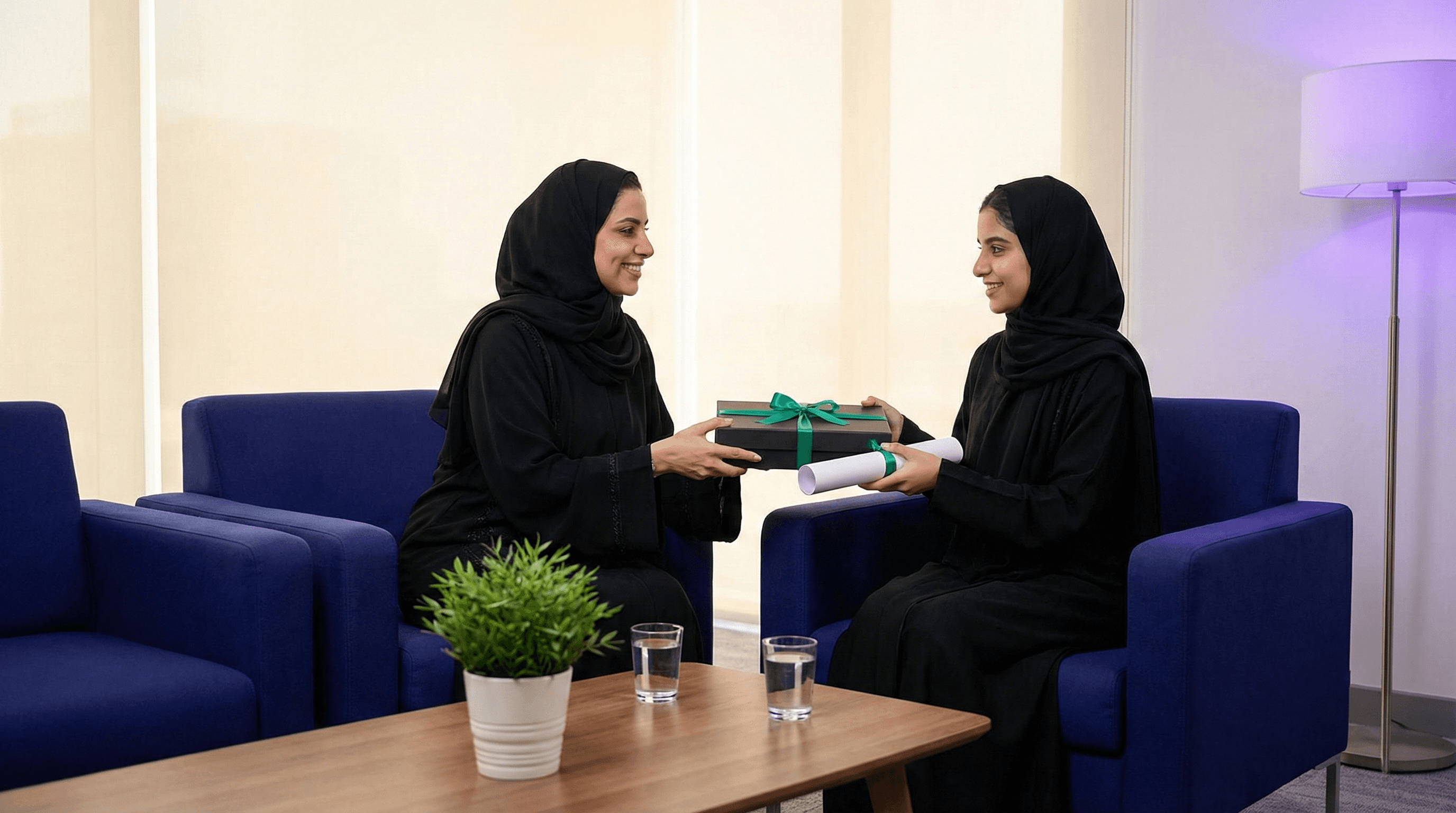
• The Best Practice: Adopt a "One Standard" approach. Whether the employee is on your payroll or sponsored by a partner like Inclusive Solutions, their onboarding experience should be indistinguishable. They should receive the same welcome kit, the same orientation, and the same dignity. This fosters a "One Team" culture essential for project delivery.
6. The 90-Day Retention Checkpoint
The onboarding process does not end when the Iqama is printed. It ends when the employee is fully productive and culturally settled.
• The Metric: Ignore "Satisfaction Surveys" that ask about the quality of the coffee. Focus on "Time to Productivity" and "Social Integration."
• The Intervention: Implement "Stay Interviews" at the 30, 60, and 90-day marks. Ask specific questions: Is the role what you expected? do you have the tools you need?
• The Goal: These check-ins allow you to catch "Buyer's Remorse" early. If a new hire is struggling with the schooling for their kids or a conflict with a manager, you can intervene before they quietly start looking for a new role.
Website:https://www.inclusive.sa | Email: info@inclusivesolutions.com.sa
Join the newsletter
Be the first to read our articles.
Follow Social Media
Follow us and don’t miss any chance!