inclusive-team
Leadership
In the early days of Saudi Arabia’s Vision 2030, the "Vision" was often viewed by the private sector as a macroeconomic roadmap—a guide for government spending, giga-projects, and oil diversification. HR leaders viewed it primarily through the lens of compliance: "We need to hit our Saudization numbers."

In the early days of Saudi Arabia’s Vision 2030, the "Vision" was often viewed by the private sector as a macroeconomic roadmap—a guide for government spending, giga-projects, and oil diversification. HR leaders viewed it primarily through the lens of compliance: "We need to hit our Saudization numbers."
Today, as we enter the second phase of this transformation, that perspective is dangerously narrow. Vision 2030 has evolved from a policy framework into a distinct operating reality. It has fundamentally altered the DNA of the Saudi labor market, shifting the focus from "employment" to "employability," and from "headcount" to "human capability."
For CEOs and CHROs in the Kingdom, the mandate is clear: If your People Strategy is not explicitly aligned with Vision 2030 objectives, you are not just out of step with the government; you are out of step with the market. You are fighting against the current of the Human Capability Development Program (HCDP), the digitization of the Ministry of Human Resources and Social Development (MHRSD), and the aspirations of the modern Saudi workforce.
Here is how forward-thinking organizations are realigning their HR function to become the engine of national and organizational transformation.
1. The HCDP Mandate: From "filling Seats" to "Building Skills"
The heart of the Vision 2030 labor strategy is the Human Capability Development Program (HCDP). Its goal is to prepare a globally competitive citizen with values defined by the Islamic Golden Age.
For the private sector, this signals a shift in recruitment and development.
• The Misalignment: Many companies still hire to fill immediate operational gaps. They rely heavily on ready-made expatriate talent for technical roles while placing Saudis in administrative functions to satisfy Nitaqat.
• The Alignment: Strategic HR aligns with the HCDP by shifting to a "Skills-Based" architecture. Instead of asking "Does this candidate have 10 years of experience?", the aligned CHRO asks "Does this candidate have the agility and foundational skills to lead this function in 3 years?"
• Actionable Strategy: organizations must pivot their Learning & Development (L&D) budgets away from generic soft skills toward technical upskilling that mirrors the national agenda—specifically in digital literacy, data analytics, and sustainability.
2. Saudization 2.0: Moving Beyond the Math
For years, Nitaqat was a mathematical game. HR Directors managed "colors" (Red, Green, Platinum). Vision 2030 has ushered in Saudization 2.0, which focuses on Qualitative Localization.
The MHRSD is no longer satisfied with headcount ratios; they are scrutinizing the type of jobs being localized. Recent decrees localizing professions like project management, procurement, and dentistry are proof of this shift.
• Strategic Risk: If your People Strategy relies on a "bottom-heavy" Saudization model (hiring many junior Saudis to offset senior expats), you are exposed to regulatory risk. The government is using data from Qiwa and GOSI to detect "fake" localization.
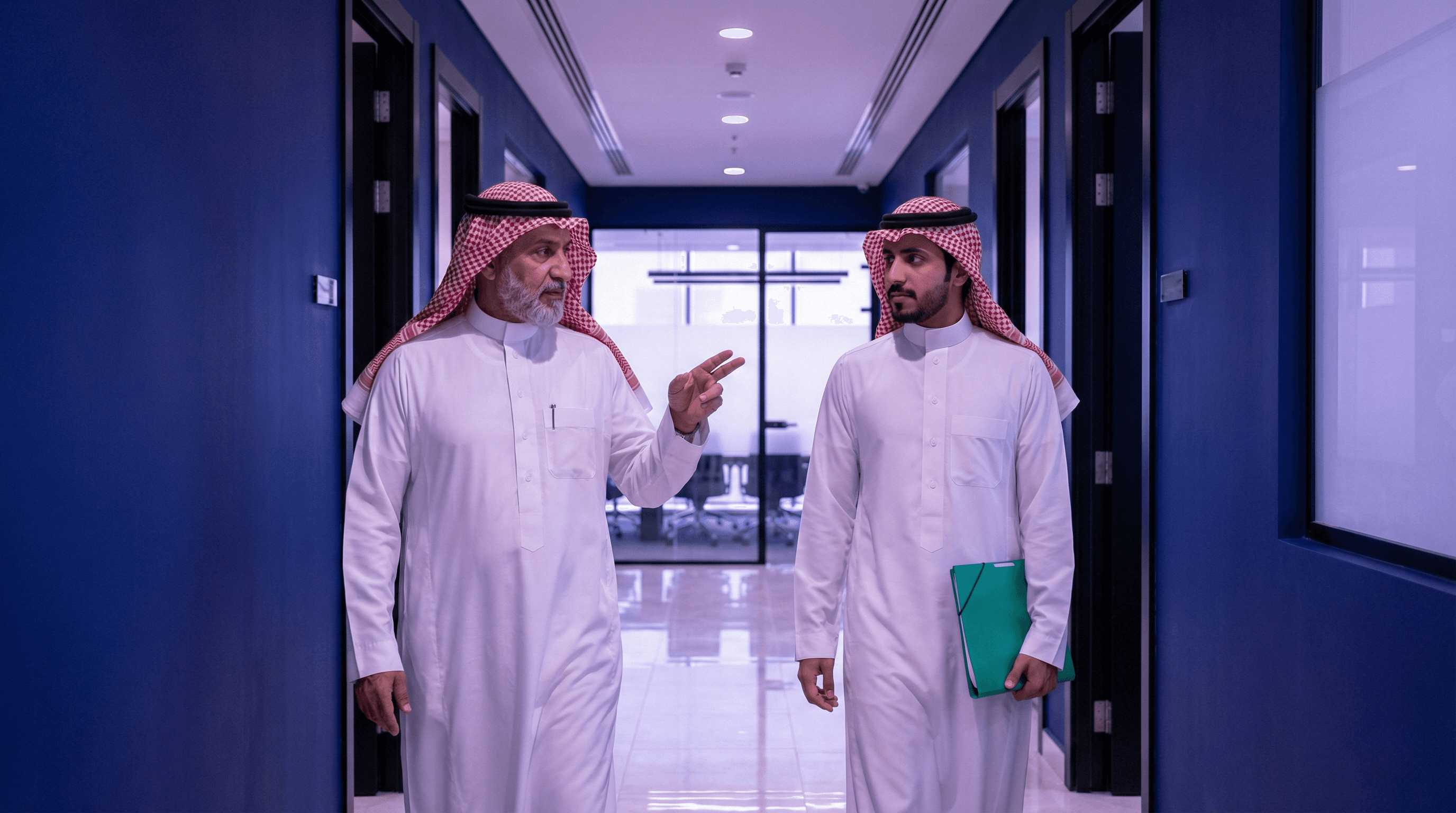
• The Strategic Fix: Your workforce plan must include a "Vertical Saudization" roadmap. You must show the Board exactly how you plan to move Saudi talent from entry-level to mid-management over a 24-month cycle. This requires robust succession planning that identifies high-potential nationals and fast-tracks them through "stretch assignments."
3. The Legislative Competitiveness: HR Policy as a Driver
The Kingdom is actively developing competitive legislative policies to attract global investment and talent. The reforms in Labor Law, the introduction of the Premium Residency, and the overhaul of the sponsorship system are designed to create a flexible, mobile labor market.
Your internal HR policies must mirror this national flexibility.
• The "Sponsorship" Mindset: Old-school HR policies treated employees as "assets" owned by the sponsor. This created stagnation.
• The "Marketplace" Mindset: Vision 2030 encourages labor mobility. Your policies on benefits, remote work, and career pathing must be competitive enough to retain talent that now has options.
• Policy Localization: You cannot simply copy-paste a policy from your London or Dubai office. Your policies must be localized to reflect the new Saudi reality—including provisions for remote work (aligned with MHRSD guidelines), diverse leave types, and distinct cultural benefits.
4. Women in the Workforce: The Untapped Economic Engine
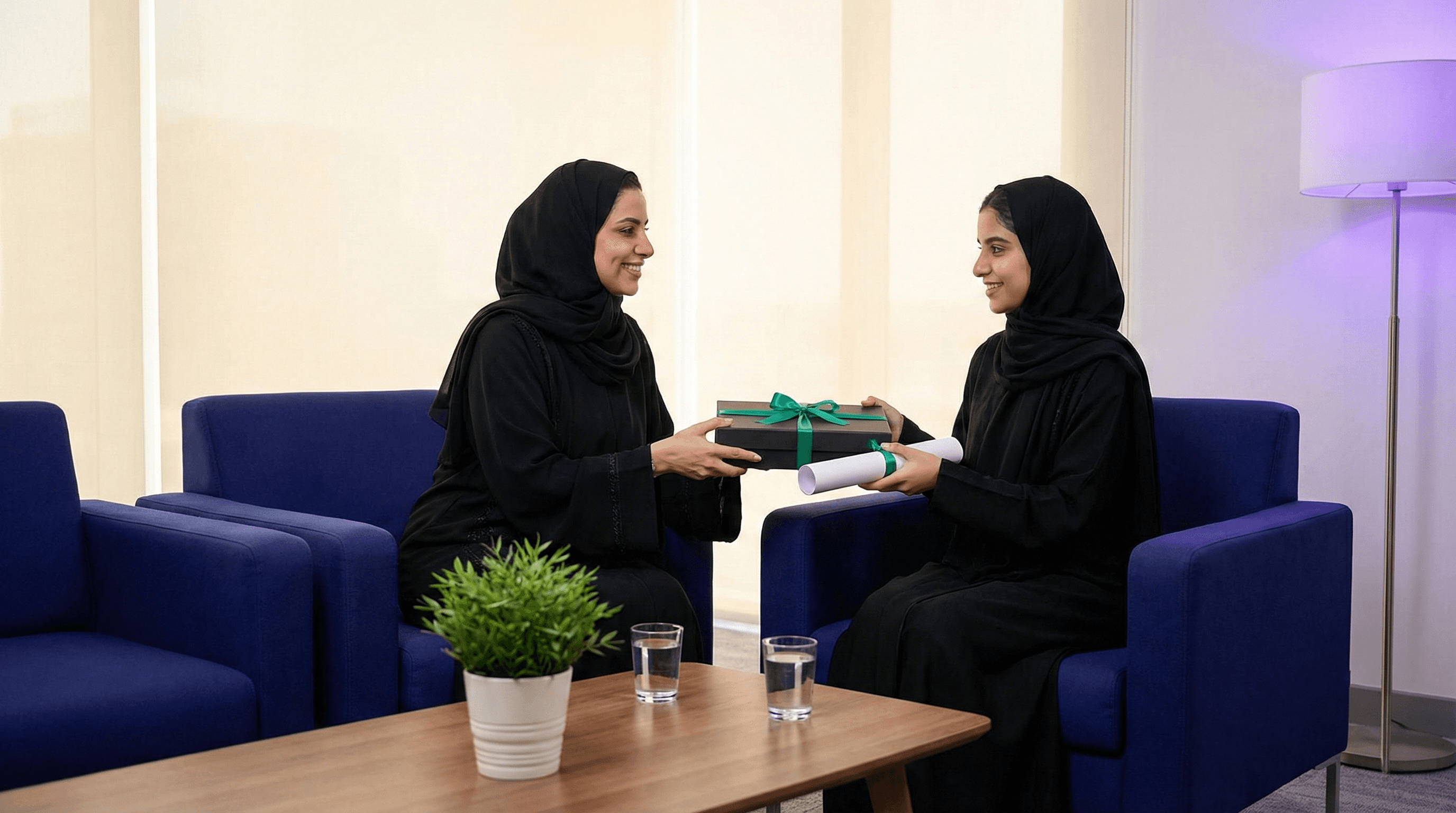
Perhaps the most visible success of Vision 2030 is the surge in female labor force participation, which has already exceeded initial targets. However, many organizations have only scratched the surface, hiring women primarily for retail or customer service roles.
Aligning with the Vision means unlocking the full economic potential of Saudi women.
• The Barrier: Often, physical workspaces and rigid working hours (late shifts) deter female talent in certain sectors.
• The Enabler: HR must lead the "Inclusive Design" of the workplace. This includes reviewing physical infrastructure, offering flexible working hours, and ensuring pay equity.
• Leadership Targets: The next phase of the Vision focuses on women in leadership. Your People Strategy should have explicit KPIs for female representation in the C-suite, supported by mentorship programs that bridge the confidence gap.
5. The Giga-Project Effect: Agility and Outsourcing
The scale of projects like NEOM, Red Sea, and Qiddiya has created a "Project Economy" within the Kingdom. Demand for talent is cyclical and intense. A traditional, static employment model cannot cope with this volatility.
To align with this pace, HR Operating Models must become "Bi-Modal".
• Core Team: Strategic roles are hired permanently to retain IP and culture.
• Flexible Layer: Project-based roles are managed through Strategic Outsourcing. This alignment allows the organization to scale up for a Vision 2030 contract win and scale down afterward without the legal and reputational trauma of mass redundancies. It shifts fixed costs to variable costs, a key tenet of financial sustainability.
6. Digital Government and Data Integration
Vision 2030 is a digital-first vision. The government has digitized the entire employee lifecycle through the Qiwa, Mudad, and Absher ecosystem.
An HR strategy that relies on manual paperwork is fundamentally misaligned with the national infrastructure.
• The Expectation: The government expects real-time data. If your payroll isn't validated by the Wage Protection System (WPS) instantly, you are flagged.
• The Strategy: Your HR tech stack must be integrated. You need systems that talk to the government portals via APIs. This is not IT’s job; it is HR’s job to ensure the "Digital Employee Experience" matches the "Digital Citizen Experience" provided by the state.
7. Culture and Values: The "Ambitious Nation"
One of the three pillars of Vision 2030 is "An Ambitious Nation." This is a call for high performance, accountability, and drive.
Does your corporate culture reflect this? Or is it stuck in the slow-moving, bureaucratic legacy of the past?
• Performance Management: The days of "tenure-based" promotion are over. Aligned organizations are implementing "High-Impact Performance Management" that rewards output, innovation, and contribution to strategic goals.
• Purpose-Driven Work: Saudi youth are driven by purpose. They want to know how their job contributes to the Kingdom’s transformation. Your Employer Value Proposition (EVP) must connect the dots between their daily tasks and the national vision.
8. Governance and Risk Management
With rapid transformation comes risk. The regulatory landscape in KSA is shifting weekly. A strategy aligned with Vision 2030 is a compliant strategy.
• Proactive Compliance: You cannot wait for a fine to change a process. You need a governance framework that monitors MHRSD updates—from the Personal Data Protection Law (PDPL) to new Saudization tables—and adjusts internal controls immediately.
• Board Oversight: HR governance must be elevated to the Board level, ensuring that workforce risks (like losing Nitaqat status) are treated with the same severity as financial risks.
9. Conclusion: The Partner for Your 2030 Journey
Aligning your People Strategy with Vision 2030 is not a one-time workshop; it is an ongoing operational commitment. It requires deep expertise in local regulations, agile operating models, and digital integration.
Most organizations struggle to bridge the gap between the "Vision" and the "Execution." Inclusive Solutions acts as that bridge.
• Strategic Alignment: Our HR Management & Consulting teams help you design workforce strategies that mirror the HCDP and Saudization 2.0 objectives.
• Operational Agility: Through our Employee Outsourcing Services, we provide the flexible workforce capacity you need to participate in the Kingdom’s giga-projects without the administrative burden.
• Digital Compliance: We integrate your operations with the Government Ecosystem (Qiwa/Mudad), ensuring that your growth is built on a foundation of ironclad compliance.
Vision 2030 is moving fast. Ensure your people strategy is moving with it.
Website:https://www.inclusive.sa | Email: info@inclusivesolutions.com.sa
Join the newsletter
Be the first to read our articles.
Follow Social Media
Follow us and don’t miss any chance!